

Quick answer
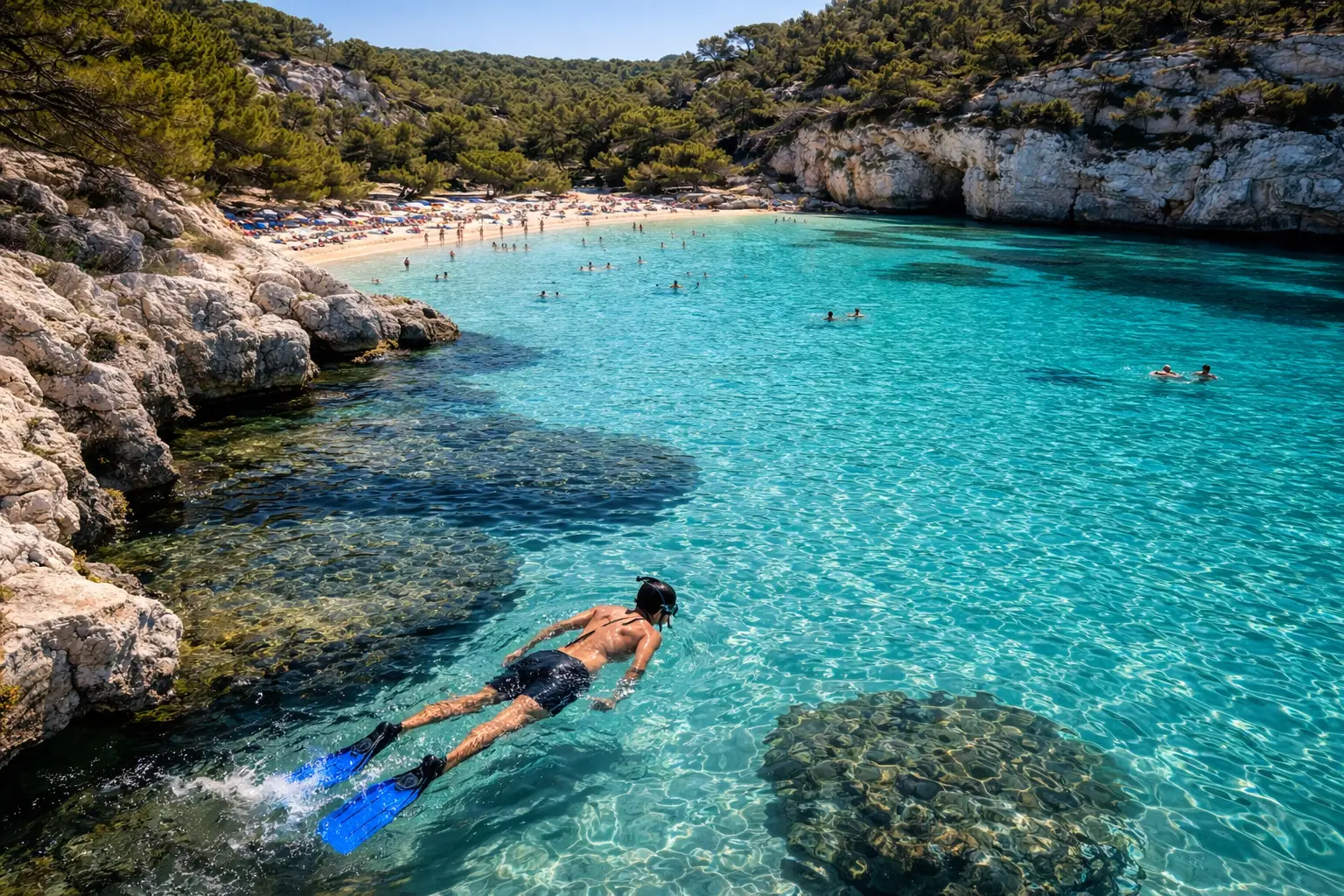
Crique snorkeling minorque centers on a dozen protected calas accessible from May through October, with water visibility reaching 20–30 meters on calm days. All public beaches and coves across Menorca are free to enter. The best snorkeling window runs from early morning until midday, before afternoon winds stir sediment and crowds arrive. Parking at remote coves fills between 09:00 and 10:00 during summer, so an arrival between 07:00 and 09:00 secures both a spot and optimal underwater clarity.
Menorca holds more coastline per square kilometer than any other Mediterranean island, and nearly half of it remains undeveloped under UNESCO Biosphere Reserve protection. That designation has preserved shallow rocky reefs, Posidonia seagrass beds and fish populations that disappeared decades ago from more developed Balearic shores. The island's best snorkeling splits between the sheltered southern calas—Cala Turqueta, Cala Macarelleta, Cala Mitjana—and the rockier northern inlets near Cala Pregonda and Cavalleria. Southern coves offer turquoise shallows with white sand and limestone outcrops where damselfish, wrasse and occasional octopus shelter. Northern sites present darker water over volcanic rock, with deeper drop-offs and larger schools of salema and bream. Both coasts share one constraint: limited parking and no public transport to the most pristine spots. Parking lots at Cala Turqueta and Macarella accommodate fewer than 100 vehicles each, and both fill before 09:30 from June through September. Latecomers face either a roadside walk of two kilometers or a return trip. Cala Pregonda requires a 25-minute hike from the nearest lot, which discourages crowds but demands early positioning. A 07:00–09:00 arrival window ensures access and coincides with the period of lowest wind and clearest water—afternoon Tramontana gusts reduce visibility and make surface swimming less comfortable. Snorkeling minorque calas requires no permits or fees, but the island enforces strict anchoring bans inside Posidonia meadows and prohibits fish feeding. Bring reef-safe sunscreen; standard formulas damage seagrass. Most northern coves lack facilities entirely—no showers, no rentals, no shade structures. Pack drinking water, a surface marker if you plan to swim beyond 50 meters from shore, and a mesh bag for any trash you generate. The marine reserve depends on low-impact use, and rangers do issue fines for Posidonia damage and littering.
“Menorca holds more coastline per square kilometer than any other Mediterranean island, and nearly half remains under UNESCO Biosphere Reserve protection.”
Opening Hours for Crique Snorkeling Minorque
Public beaches and coves in Menorca remain accessible 24 hours a day, allowing visitors to plan their snorkeling excursions at any time.
| Monday | 00:00–23:59 | |
|---|---|---|
| Tuesday | 00:00–23:59 | |
| Wednesday | 00:00–23:59 | |
| Thursday | 00:00–23:59 | |
| Friday | 00:00–23:59 | |
| Saturday | 00:00–23:59 | |
| Sunday | 00:00–23:59 |
How to Reach Sites for Crique Snorkeling Minorque
Most snorkeling sites in Menorca are located along the coast of the Balearic Islands and require a combination of driving and hiking to access. Visitors typically reach the designated trailheads by vehicle before completing the final leg of the journey on foot.
Me-1 highway to coastal access roads
TMSA routes to nearest coastal village
Camí de Cavalls trail to specific cove
Charter from Mahón or Ciutadella
Checklist for Crique Snorkeling Minorque
Pack light but purposefully for a day exploring Menorca's transparent waters and rocky coastlines.
-
Bring your own snorkel, mask, and fins — Rental shops are scarce near remote coves.
-
Pack reef-safe sunscreen (SPF 50+) — Mineral-based formulas protect both skin and marine ecosystems.
-
Carry 2–3 liters of water per person — No facilities exist at many smaller calas.
-
Wear water shoes or neoprene booties — Rocky entries and sea urchins are common.
-
Pack a dry bag for valuables — Sand and saltwater damage electronics quickly.
-
Bring a light towel and sun shelter — Shade is limited at exposed beaches.
-
Arrive between 07:00 and 09:00 — Parking fills rapidly during summer months.
Rules and Etiquette for Crique Snorkeling Minorque
Menorca's calas host protected marine ecosystems and geological formations that require careful visitor conduct. Follow these guidelines to preserve the coves for future snorkelers.
Do
- Stay at least one meter from marine life while observing
- Apply reef-safe sunscreen at least 30 minutes before entering water
- Secure all belongings to prevent litter from reaching the water
- Rinse equipment with fresh water after each snorkel session
- Report injured marine animals to local environmental authorities
- Practice buoyancy control to avoid accidental contact with rocks
Don't
- Touch, chase, or feed fish and other marine organisms
- Remove shells, rocks, sand, or any natural materials from coves
- Stand on or grab underwater rock formations for support
- Wear chemical sunscreens containing oxybenzone or octinoxate
- Leave food waste or plastic items on beaches or cliffs
- Swim through seagrass meadows instead of going around them
Check availability
Frequently asked questions about crique snorkeling minorque
Everything you need to know about crique snorkeling minorque