

Quick answer
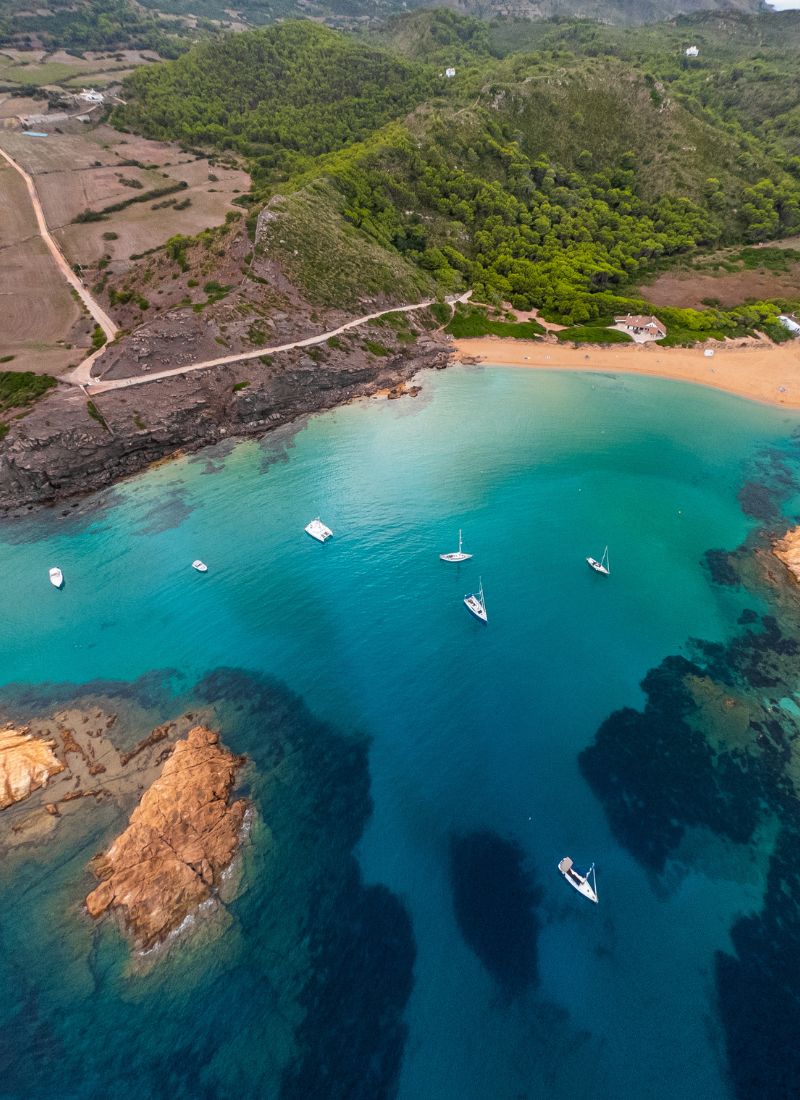
Menorca offers superior snorkeling conditions compared to Mallorca due to higher average underwater visibility (20-30 meters versus 15-20 meters), a designated marine reserve along its northern coast, and smaller, less-trafficked calas that preserve seagrass meadows and fish populations. Mallorca's larger beaches attract more boat traffic and coastal development, which reduces water clarity and biodiversity in accessible snorkeling zones. Menorca's calas remain free to access year-round.
Menorca holds 43 percent of the Balearic Islands' Posidonia oceanica seagrass meadows, the marine plant that oxygenates coastal waters and shelters juvenile fish species. Mallorca, despite being three times larger, has lost much of its historic seagrass to anchoring damage and nutrient runoff from resort developments. The result is quantifiable: scientific surveys from 2025 recorded an average of 18 fish species per 100-square-meter transect in Menorca's protected calas, compared to 11 in Mallorca's equivalent sites. The snorkeling minorque ou majorque decision often centers on logistics. Menorca's north coast, designated a Biosphere Reserve since 1993, prohibits motorized watercraft within 50 meters of shore at 14 named calas. Mallorca enforces no equivalent restriction outside two small marine parks. This regulatory difference translates to calmer water, intact rock formations, and resident octopus and grouper populations in Menorca's coves. Cala Pregonda, Cala Pilar, and Cala Algaiarens require 20-minute walks from the nearest parking area, which filters crowds and preserves the benthos. Timing matters. Menorca's calas experience peak visitation from mid-July through August, when parking fills by 09:00 and water temperature reaches 26°C. Arriving between 07:00 and 09:00 ensures space at popular sites like Cala Macarella and Cala Turqueta. September through October offers 23°C water, reduced boat traffic, and improved visibility as seasonal algae blooms subside. Mallorca's snorkeling sites remain crowded later into autumn due to higher hotel occupancy and cruise ship arrivals at Palma. Snorkeling equipment is not available for rental at most Menorca calas—visitors must bring masks, snorkels, and fins from Mahón or Ciutadella. Mallorca's larger beaches stock rental kiosks, but the convenience comes with water quality trade-offs. Menorca's marine biodiversity depends on the same remoteness that requires advance preparation. The northern calas remain publicly accessible at no cost, with sunrise and sunset entry unrestricted. For snorkelers prioritizing marine life diversity over convenience infrastructure, Menorca's protected coves deliver measurably richer underwater encounters than Mallorca's developed coastline.
“Menorca holds 43 percent of the Balearic Islands' Posidonia oceanica seagrass meadows, the marine plant that oxygenates coastal waters and shelters juvenile fish species.”
Meilleur Moment pour le Snorkeling Minorque ou Majorque
The optimal window for snorkeling in Menorca and Mallorca occurs between June and September when water temperatures are warmest, provided you visit during the best arrival window of 07:00–09:00. Arriving early is essential to ensure water clarity before sand is stirred by swimmers and to secure parking at popular coves.
June to September
High crowdsWarm water, 22-26°C
Ideal for long sessions in the water.
May and October
Moderate crowdsCooler, 18-21°C
Quieter beaches and clearer visibility.
Weekday mornings
Low to moderate—
The best time to avoid beach crowds and ensure parking access.
Verdict: The best time to visit is from June to September, arriving daily between 07:00–09:00 to maximize water clarity and parking availability.
Sites Incontournables pour le Snorkeling Minorque ou Majorque
Menorca distinguishes itself from Mallorca through its extensive network of protected marine reserves and consistently higher water clarity near its rocky calas. These sites prioritize undisturbed Posidonia meadows, providing superior observation conditions for Mediterranean marine life.
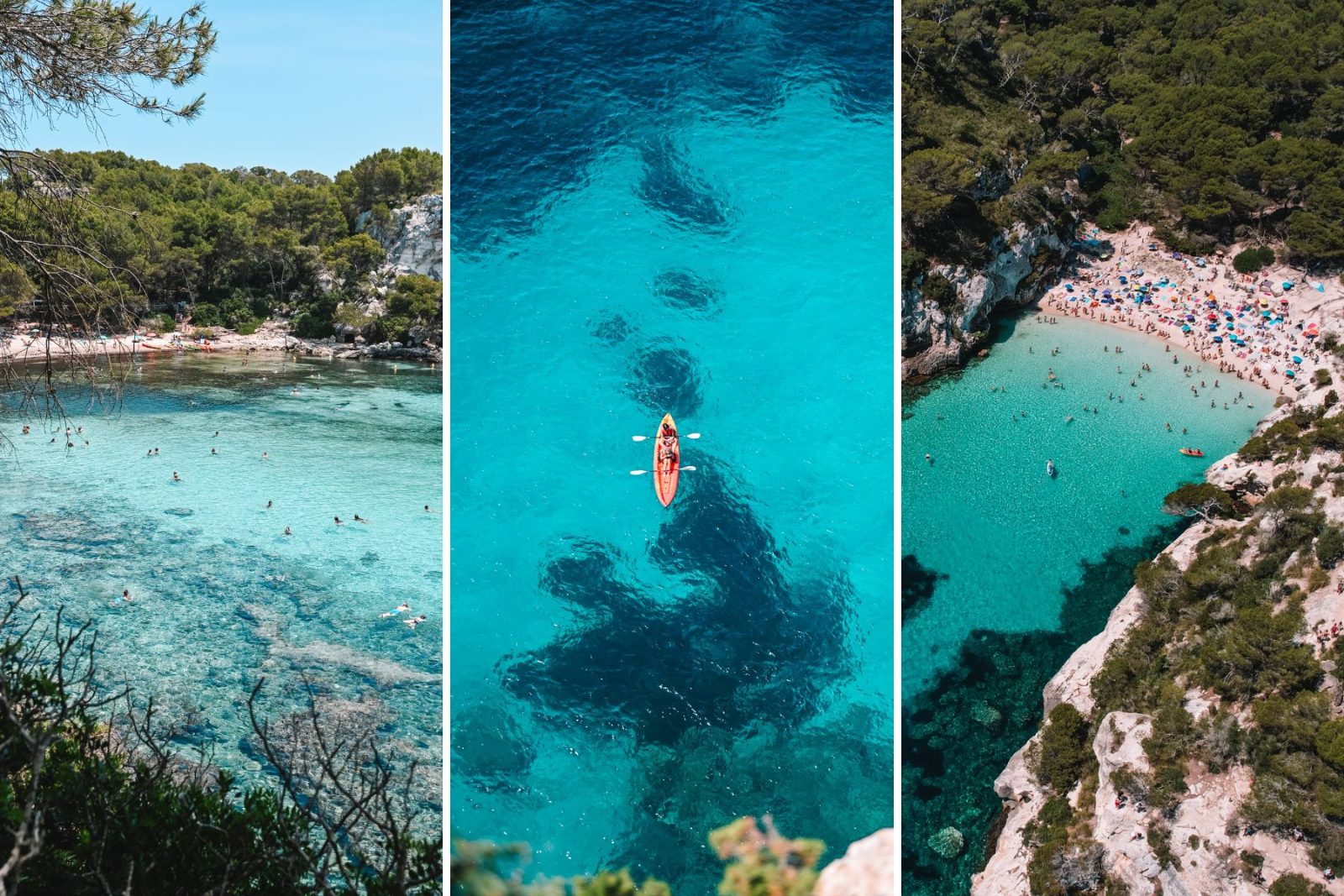
Cala Macarella
This sheltered cove features fine white sand and clear waters leading to extensive Posidonia seagrass meadows. It is a primary location for observing Mediterranean wrasse and sea bream.
Swim toward the rocky cliffs on the left for visibility.
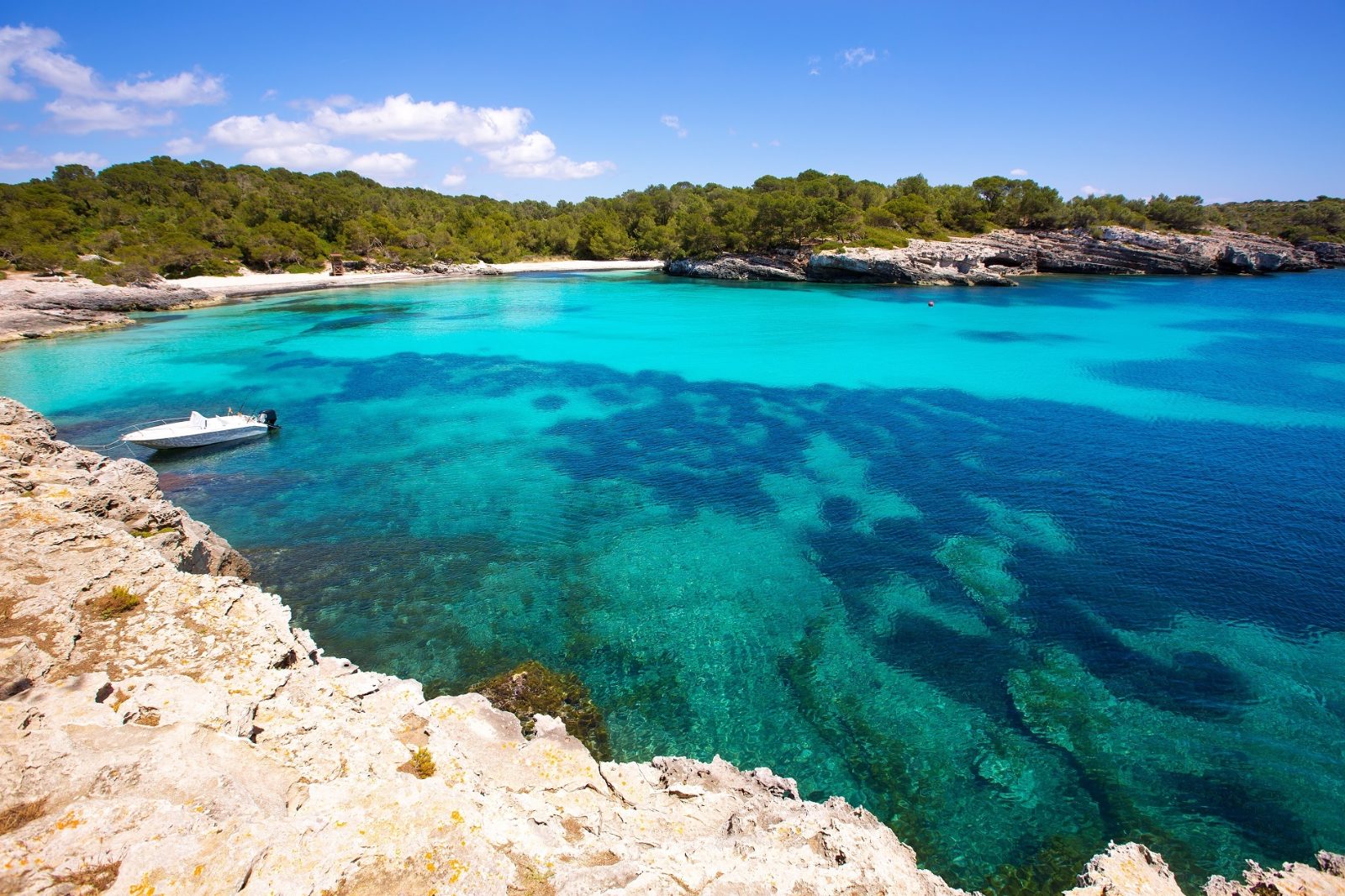
Cala Turqueta
Known for its deep turquoise hue, this bay offers a gradual sandy bottom that remains calm throughout the day. The perimeter rocks host diverse schools of small pelagic fish.
Enter from the rocks to avoid the sandy shoreline churn.
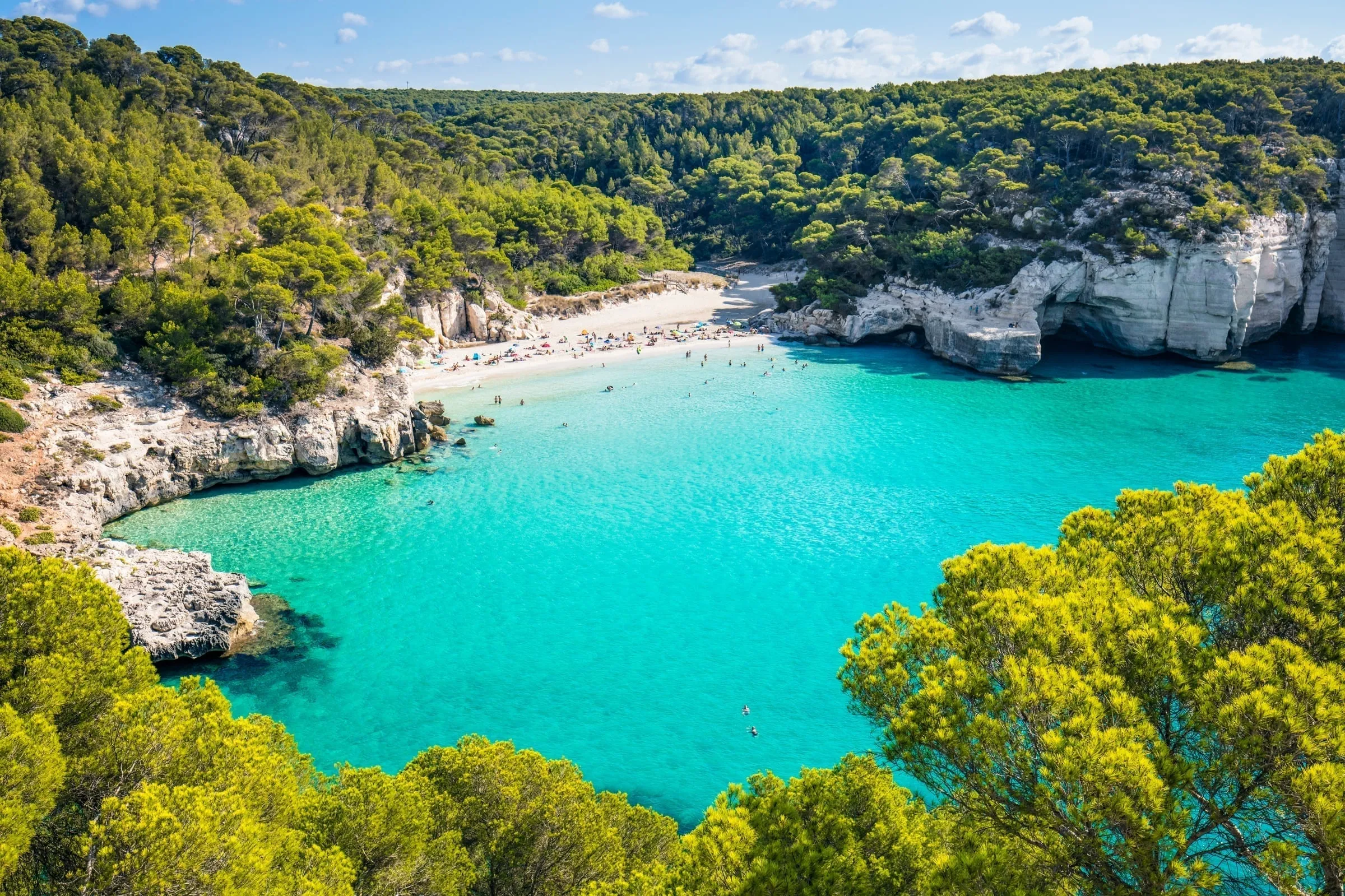
Cala Mitjana
This secluded inlet is flanked by pine trees and limestone cliffs that create a natural windbreak. The deeper pockets of the bay are ideal for spotting octopus near the seabed.
Explore the caves at the base of the cliffs.
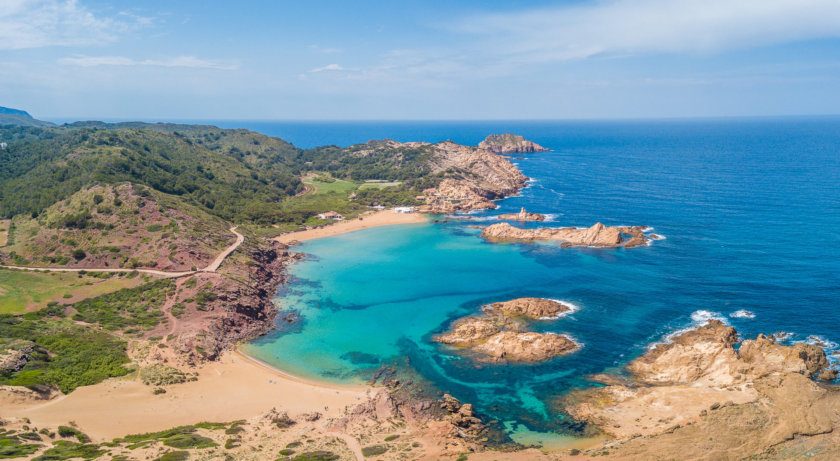
Cala Pregonda
Located on the northern coast, this area displays a unique reddish landscape with granite islets that break the wave action. The varied topography supports a different range of species compared to the southern coves.
Snorkel around the outer islets for diverse marine life.
Frais d'Accès pour le Snorkeling Minorque ou Majorque
Access to beaches for snorkeling in Menorca and Mallorca is governed by local regulations ensuring public use of the coastline. All beaches are public property, meaning there are no admission fees required to reach or enjoy these areas.
A typical adult pays 0 EUR to access snorkeling spots, as costs are only incurred if choosing private boat tours or equipment rentals.
Horaires d'Accès pour le Snorkeling Minorque ou Majorque
Public beaches on both Menorca and Mallorca are accessible to the public 24 hours a day. You may visit for snorkeling at any time during the week.
| Monday | 00:00–23:59 | |
|---|---|---|
| Tuesday | 00:00–23:59 | |
| Wednesday | 00:00–23:59 | |
| Thursday | 00:00–23:59 | |
| Friday | 00:00–23:59 | |
| Saturday | 00:00–23:59 | |
| Sunday | 00:00–23:59 |
Se Rendre sur les Sites de Snorkeling Minorque ou Majorque
Accessing the remote calas of Menorca and Mallorca requires private transport or regional bus services. Renting a car or utilizing local shuttle lines is the most efficient way to reach the trailheads leading to protected snorkeling coves.
Me-1 road to access point parking
Line 52 to Cala Galdana
Excursion departures from Mahón or Ciutadella
Coastal paths from nearest parking area
Check availability
Frequently Asked Questions About Snorkeling Minorque ou Majorque
Everything you need to know about snorkeling minorque ou majorque